
How a move from Spain to another European country works
A move from Spain to Poland, Germany, France, Portugal, Austria, or another European country requires advance planning. You need to determine the volume of belongings, choose suitable transport, agree on a loading date, prepare your things, and formalize the transport with documentation.

A professionally organized international move goes step by step. The client knows in advance how the process works, the cost of the service, the estimated delivery timeframe, and the carrier's terms of liability.
Let's look at how a move from Spain across Europe works in practice.
1. Submitting a moving request
The first stage is contacting the transport company. For a preliminary quote, you need to give the manager the basic information:
- the city and address of pickup in Spain;
- the city and address of delivery;
- the desired moving date;
- an approximate volume of belongings;
- whether there is furniture and large appliances;
- the floors at the pickup and delivery addresses;
- whether there is an elevator;
- whether movers are needed;
- any features of vehicle access to the building.
The more detailed the order description, the more accurately the cost can be calculated and the right vehicle chosen.
To assess the volume, the client can send a list of belongings, photos, furniture dimensions, or a short video of the rooms. This is especially convenient when the entire contents of an apartment or house need to be moved.
2. Calculating the cost of transport
The price of a move from Spain depends on several factors. The distance between cities matters, but it's not the only criterion.
The calculation takes into account:
- the transport route;
- the volume and weight of belongings;
- the type of vehicle needed;
- the number of pickup and delivery addresses;
- access conditions;
- whether movers are needed;
- the duration of loading work;
- the chosen transport format;
- whether temporary storage is needed.
For example, a move from Barcelona to France and a move of belongings from Malaga to Poland will differ in route length and delivery timeframe.
After receiving the information, the manager prepares an individual quote and explains which services are included in the price.
3. Agreeing on terms and signing the contract
Before the transport, the parties agree on the route, date, cost, volume of belongings, and additional services. All essential terms are recorded in an official contract.
The contract confirms the carrier's liability and protects the client's interests. It may specify:
- the pickup and delivery addresses;
- the agreed cost;
- the payment procedure;
- the parties' obligations;
- the estimated timeframe;
- the insurance terms;
- the procedure to follow if the order changes.
Belongings should not be handed over to a carrier without official paperwork. Verbal agreements don't allow the company's liability, the service cost, and the composition of the cargo to be clearly recorded.
Go-Bring organizes international moves under an official contract and provides the necessary documentation support.
4. Preparing belongings for loading
Before the truck arrives, the client needs to prepare their belongings for transport themselves. Go-Bring does not pack the cargo, so boxes, furniture, and appliances need to be ready in advance.
It's recommended to distribute personal belongings into sturdy boxes. Each box should be labeled with the room and its main contents.
It's best to disassemble furniture if possible. Hardware is best packed into separate labeled bags and attached to the corresponding parts.
Home appliances need to be unplugged, cleaned, and prepared for transport. The refrigerator should be defrosted in advance, drained of water, and have its doors secured. The moving parts of the washing machine need to be secured according to the manufacturer's recommendations.
Documents, money, jewelry, medication, and essential items are best transported separately.
5. Planning the vehicle's arrival
Once the order is agreed on, the manager confirms the date and estimated arrival time of the transport.
Before loading, you need to check whether the vehicle can access the building. In some areas of Barcelona, Madrid, Valencia, and other Spanish cities, there are restrictions on truck traffic or parking.
If it's not possible to pull up directly to the building, belongings may need to be carried to the nearest accessible spot. It's important to discuss these conditions in advance, since they can affect how long loading takes and how many movers are needed.
The client is also advised to check the residential complex's rules. Sometimes the freight elevator can only be used, or the move can only take place, during certain hours.
6. Loading belongings
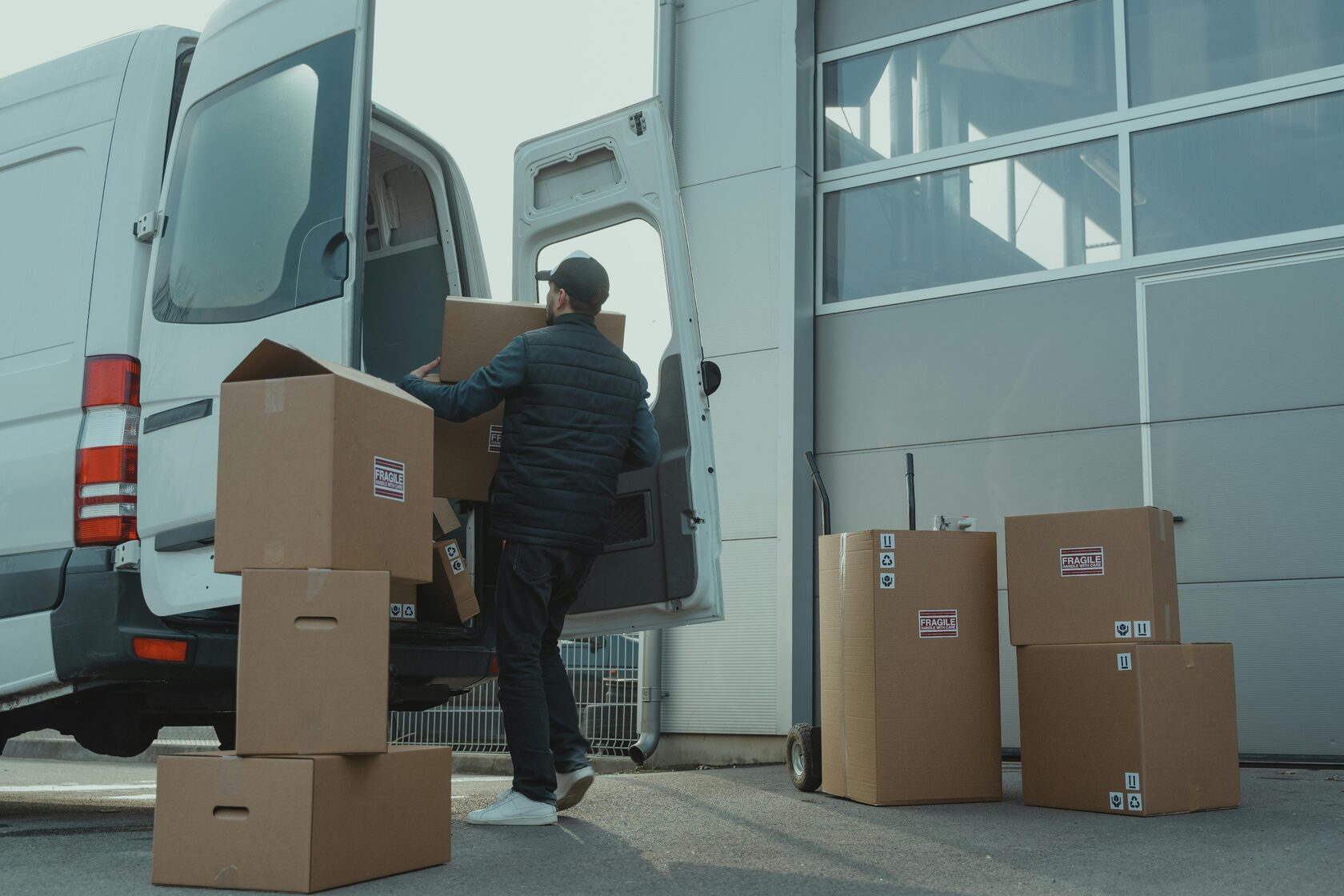
At the agreed time, the vehicle arrives at the pickup address. Before work begins, the readiness of the belongings and whether the actual volume matches the preliminary request are checked.
During loading, belongings are placed in the cargo compartment based on the size, weight, and stability of the items. Heavy boxes and furniture are positioned to reduce the risk of shifting during transport.
If needed, Go-Bring can provide movers. Their number is chosen based on the volume of belongings, the number of floors, whether there's an elevator, and the distance from the building to the vehicle.
Once loading is complete, the composition of the cargo is confirmed and the necessary transport documents are prepared.
7. Payment after loading
The payment procedure is agreed on before the transport begins and is recorded in the contract.
Go-Bring offers a convenient way to arrange payment after the belongings are loaded. The client knows the agreed cost and payment terms in advance.
If the actual volume differs significantly from what was originally stated, or additional work comes up, the manager discusses the changes with the client before carrying out the relevant services.
8. International transport
After loading, the vehicle sets off on the agreed route. The delivery time depends on the distance, road conditions, the driver's work schedule, and the chosen transport format.
The most common routes are:
- Spain — France;
- Spain — Germany;
- Spain — Poland;
- Spain — Portugal;
- Spain — Austria;
- Spain — Czech Republic;
- Spain — Benelux countries.
Transport can be carried out with a dedicated vehicle or as part of a shared route.
A dedicated vehicle suits clients for whom specific dates and a minimal number of intermediate stops matter. Shared transport makes efficient use of space in the vehicle, but requires coordination with the overall route schedule.
9. Monitoring the move with a personal manager
Throughout the transport, the client stays in touch with their personal manager. They coordinate the process, receive updates from the driver, and inform the client about the main delivery stages.
Through the manager, you can find out:
- whether loading is complete;
- when the vehicle left Spain;
- what stage the route is at;
- whether the estimated arrival date has changed;
- when to start preparing for unloading.
Having a single point of contact simplifies communication. The client doesn't have to reach out to different employees and re-explain the order details.
10. Cargo insurance
For an international move, it's important to determine the carrier's liability and the insurance terms in advance.
Insurance helps protect the client's property interests if a risk covered by the contract occurs. The coverage terms depend on the type of cargo, its value, and the chosen insurance plan.
Before loading, you need to provide accurate information about the composition of your belongings. Valuable items should be listed separately in the cargo inventory, and the possibility of transporting them should be agreed on with the manager.
Go-Bring organizes transport with cargo insurance and official documentation.
11. Delivery and unloading
Before the vehicle arrives, the manager or driver contacts the client and agrees on the delivery time.
By this point, access to the delivery address needs to be ensured:
- check that the vehicle can access the building;
- clear space for unloading;
- prepare the elevator;
- notify the building administration;
- make sure the recipient is present.
After arrival, the belongings are unloaded and handed over to the client. It's recommended to immediately check the number of boxes and the condition of large items.
If Go-Bring provides movers, they carry the belongings from the vehicle to the agreed room. Furniture arrangement, assembly, and unpacking are not included in standard transport unless agreed on separately.
How long a move from Spain takes
There's no single timeframe for all routes. The duration depends on the city of departure, the delivery country, and the chosen transport format.
The timeframe can be affected by:
- the distance;
- how busy the roads are;
- the season;
- restrictions on truck traffic;
- weekends and holidays;
- the number of stops along the route;
- whether a dedicated or shared vehicle is used;
- whether storage of belongings is needed.
The exact dates should be agreed on after assessing the specific route. It's best to submit your request in advance, especially if the move is planned for summer, the end of the month, or a holiday period.
What to do if your new home isn't ready yet
Sometimes belongings need to be picked up from Spain before there's an opportunity to receive them at the new address.
In that case, you can use temporary storage. Go-Bring has warehouses in Warsaw, Berlin, and Prague. The storage option, duration, and cost are agreed on individually.
This option is suitable if:
- the handover of the keys is delayed;
- renovation work isn't finished yet;
- the move-in date is changing;
- the client is temporarily in another country;
- the move needs to be split into several stages.
How Go-Bring organizes the move
Go-Bring has been carrying out international transport across Europe for more than 10 years. The company organizes moves from Spain to Poland, Germany, France, Portugal, Austria, and other European countries.
The client gets:
- an individual cost calculation;
- a suitable vehicle;
- an official contract;
- documentation support;
- cargo insurance;
- a personal manager;
- the option to provide movers;
- convenient payment methods;
- access to storage warehouses in Warsaw, Berlin, and Prague.
The team communicates in Russian, Ukrainian, Polish, French, and English.
Summary
A move from Spain begins with assessing the volume of belongings and calculating the cost. Then the terms are agreed on, the contract is signed, the date for the vehicle's arrival is set, and belongings are prepared.
After loading, the transport sets off on its route, and a personal manager oversees the organizational side and keeps the client informed about the delivery progress. The move ends with the belongings being unloaded at the new address.
To get a quote, tell the manager the cities of departure and delivery, an approximate list of your belongings, and your desired dates.
Website: https://moving-go-bring.pl/
Phone / Telegram / Viber / WhatsApp: +48 608 583 303